
The Ganga river in Varanasi is experiencing a significant rise in water level, disrupting daily activities along the ghats. This has led to severed connectivity between ghats, relocation of cremation activities at Manikarnika Ghat, and growing concern among residents as the river approaches its danger mark.

A senior cryosphere specialist has warned of a potential secondary flash flood in Nepal due to debris from an ice-rock avalanche accumulating at a river confluence, creating a temporary dam that is collecting water.

The Gandak river's water level in Bihar is showing a receding trend, bringing relief to low-lying areas after flash floods in Nepal caused a surge. Despite a marginal rise due to late-night rainfall in Nepal, authorities are monitoring the situation closely, with no adverse impact on embankments reported.

The administration has sounded a high alert in Maharajganj and Kushinagar districts of Uttar Pradesh, while stepping up the monitoring of the Gandak and other water bodies downstream of rivers in Nepal, following devastating flash floods in the neighbouring country that have killed more than 350 people and left thousands missing.

Due to heavy rains in some areas of Haryana on Sunday, the water level of Yamuna rose slightly, she said.

It is for the first time in 13 years that the water has reached near-capacity level.

Thane and Palghar districts in India experienced heavy rainfall, leading to road closures and the evacuation of residents from vulnerable areas. The rising water levels of the Ulhas River prompted authorities to close the Raite bridge on the Kalyan-Murbad road, diverting traffic via Titwala. In Ambernath, 50 residents were evacuated from Swabhiman Chali near the Ulhas river. Waterlogging was reported in low-lying areas of Kulgaon-Badlapur. Officials are monitoring the situation closely and urging timely reporting of incidents.

The Ganga river in Varanasi has surpassed its warning level, leading to the suspension of all boat operations and heightened monitoring by district authorities. The rising water levels, also affecting the Varuna river, have partially impacted 11 localities and displaced hundreds of families, who are now housed in relief camps as rescue efforts intensify.

The Ganga continues to rise in Patna, inching closer to the danger mark and putting low-lying areas on alert.
A study by scientists at Goa's National Centre for Polar and Ocean Research (NCPOR) has revealed a significant increase in dissolved oxygen levels in the Indian sector of the Southern Ocean (ISSO) over the past three decades, contrary to global trends of declining ocean oxygen. This oxygenation, primarily due to enhanced ocean ventilation, intensified between 1993 and 2025, particularly in the Polar and Antarctic zones, and has crucial implications for global ocean health and climate regulation.


Nepalese authorities have issued a flood alert for central, western, and eastern parts of the country as water levels in major rivers like Sun Koshi, Budhi Gandaki, Mahakali, and Marsyangdi have crossed alert and danger levels due to continuous monsoon rainfall, urging residents to remain vigilant.

West Bengal and Assam have initiated high alert measures, including the evacuation of 12,000 people, following a glacial lake outburst flood (GLOF) in Bhutan's Gasa region. The incident caused a significant rise in the Sankosh River's water level, prompting authorities to deploy disaster response teams and monitor vulnerable areas.

A Glacial Lake Outburst Flood (GLOF) in Bhutan's Lemthang has caused water to flow towards India's Sankosh River, leading to a high alert in North Bengal. Authorities have advised evacuations, activated disaster management teams, and relocated thousands of residents as they monitor the situation closely for potential flooding.

A report by Envirocatalysts reveals that Delhi was the most polluted among 24 state and Union Territory capitals between Diwali 2025 and Diwali 2026, with annual average PM2.5 concentrations more than double the national standard. The analysis highlights that Diwali-day pollution contributes minimally to the overall annual exposure, with other sources like vehicles, dust, and industrial emissions being the primary culprits. The report calls for year-round clean-air action plans.

Bihar is facing a severe flood situation with the Central Water Commission issuing an 'Orange' bulletin as the Gandak and Ganga rivers flow above danger marks, leading to embankment breaches and inundation in Saran and other districts. Relief and rescue operations are intensifying with NDRF and SDRF teams deployed, and ration packets being air-dropped to affected areas.

Glimpses of swollen rivers, submerged ghats and waterlogged neighbourhoods after relentless monsoon rains lashed Uttarakhand on August 18, 2026.

Four picnickers were rescued from a river island in Madhya Pradesh's Khandwa district after being stranded for 11 hours due to a sudden rise in water levels. The State Disaster Emergency Response Force (SDERF) conducted a challenging operation, using drones to deliver supplies and eventually towing a motorboat to safety.
A new study indicates that accounting for daily weather variability provides a more accurate estimation of glacier melt, suggesting that glaciers worldwide are losing ice at a faster rate than previously calculated. Researchers found that simulations incorporating daily weather patterns project greater ice loss by the end of the century and a higher contribution to global sea-level rise.

Tamil Nadu is experiencing heavy rainfall due to the active northeast monsoon, leading to severe inundation in Chennai and southern districts, significant waterlogging, and rising water levels in reservoirs. Chief Minister C Joseph Vijay reviewed preparedness, while the IMD predicts continued moderate to heavy rainfall across the state until October 26, with two low-pressure systems forming. The rains have also impacted agriculture and infrastructure.

Nepal is grappling with a deepening flood crisis as the death toll from devastating flash floods in Rasuwa and surrounding districts has tragically risen to 538, with authorities now warning of a fresh flood threat and initiating evacuations.

Nepal has issued a fresh flood warning for areas previously hit by a devastating flash flood, as water levels rise and a dam on the Tibetan side reportedly burst again. Authorities are urging residents and rescue workers to evacuate, with concerns over a newly formed barrier lake near the Nepal-China border posing a significant risk.
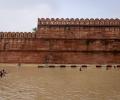
The Yamuna surged to a record 208.48 metres at 8 am, the Central Water Commission said on Thursday, adding that it is likely to rise to 208.75 metres by 4 pm.

The Earthshot Prize 2026, founded by Prince William, held its sixth annual global environmental awards ceremony in Mumbai, marking its first time in India.

Villages along the Uttar Pradesh-Bihar border are on high alert following devastating flash floods in Nepal, with authorities monitoring the Gandak River for potential downstream surges and the NDRF deploying 20 teams for preparedness.

Heavy rainfall has severely impacted Uttar Pradesh, Jharkhand, and Uttarakhand, leading to casualties, widespread flooding, and significant disruptions. The Char Dham Yatra was suspended, flights were cancelled, and standing crops were damaged. Other regions like Himachal Pradesh, West Bengal, Rajasthan, and Delhi also experienced varied weather conditions, including snowfall and light rains.

The rising water level in the Narayani-Gandak river following heavy rainfall in Nepal has increased the flood threat in villages along the river in Maharajganj district, officials said on Sunday.

Parts of Bihar are facing a potential deluge as major rivers like the Ganga, Gandak, Kosi, and Burhi Gandak show rising water levels. This surge is attributed to devastating flash floods and continuous rainfall in neighbouring Nepal, prompting authorities to open barrage gates and place disaster response teams on standby.

Floods have forced hundreds of government schools across Bihar to shut, disrupting studies for thousands of students.
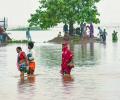
The Ganga's rising water level is causing significant flooding in Bihar and Uttar Pradesh districts.

'The valley is around 16 km from the Nepal border, and it took just 8-10 minutes for the ice and rocks to reach the Nepal border. You can imagine how fast it must have travelled!'

A recent study by IIT Kharagpur researchers reveals that powerful cyclones can significantly impact groundwater quality up to 100 metres below the surface in deep coastal aquifers. Conducted in the climate-vulnerable Sundarbans region, the research highlights how extreme weather events disturb the freshwater-seawater balance, threatening drinking water security and necessitating depth-specific groundwater management strategies.

Following devastating flash floods in Nepal, experts are calling for systematic scientific assessments of glaciers to understand and mitigate hazards, alongside the development of a robust land use policy for the Himalayan region. The floods, which killed over 460 people and left thousands missing, are believed to be linked to climate change impacts on glaciers and permafrost.

The flood situation in Assam is showing signs of improvement with receding water levels, though over 6.5 lakh people across six districts remain affected and the death toll has risen to 66. Relief operations are being intensified, with central and state leaders reviewing measures and a central team assessing damages.

Delhi experienced its most polluted Diwali in five years, but the official air quality figures are under scrutiny. Several monitoring stations reportedly went offline during the peak firecracker period on Sunday night, leading to discrepancies between government and private agency data. Experts and opposition leaders have raised concerns about the reliability of the AQI tracking, with allegations of "data fraud" and calls for greater transparency and accountability.

Assam's flood toll has climbed to 87 with two new fatalities, even as water levels recede in most inundated areas, affecting nearly 1.3 lakh people. The India Meteorological Department (IMD) has issued warnings for extremely heavy rainfall in neighbouring Arunachal Pradesh and Meghalaya, which could impact several bordering Assam districts.

The water levels in the Bhotekoshi River rose again on Sunday, days after a devastating flash flood struck Nepal, authorities warned, urging residents and rescue personnel in flood-hit districts to remain alert.

The death toll from devastating flash floods in Nepal has surged to 1,252, with more bodies recovered and fresh flood risks emerging due to continuous rainfall in the Bhotekoshi River's upstream areas. The disaster, triggered by an ice-rock avalanche, has also left 4,875 people missing and prompted calls to address climate change's impact on the Himalayan region.
The water level reached 205.60 metres at 9:00 am on Friday, a senior Delhi Government official said, adding that all steps are being taken to evacuate people living in low-lying areas.

The death toll from devastating flash floods in Nepal has surged to 1,050, with nearly 4,000 people, including foreigners and security personnel, still missing. Rescuers are struggling with intermittent rainfall, rising river levels, and difficult terrain, while expert teams from India and China assist in operations, particularly at hydropower project sites where many workers are believed to be trapped in tunnels.
